Your cart is currently empty!
Category: Uncategorized
-

Unparalleled Speed is Here
A message from Dr. Priya Sharma, Lead Manufacturing Engineer
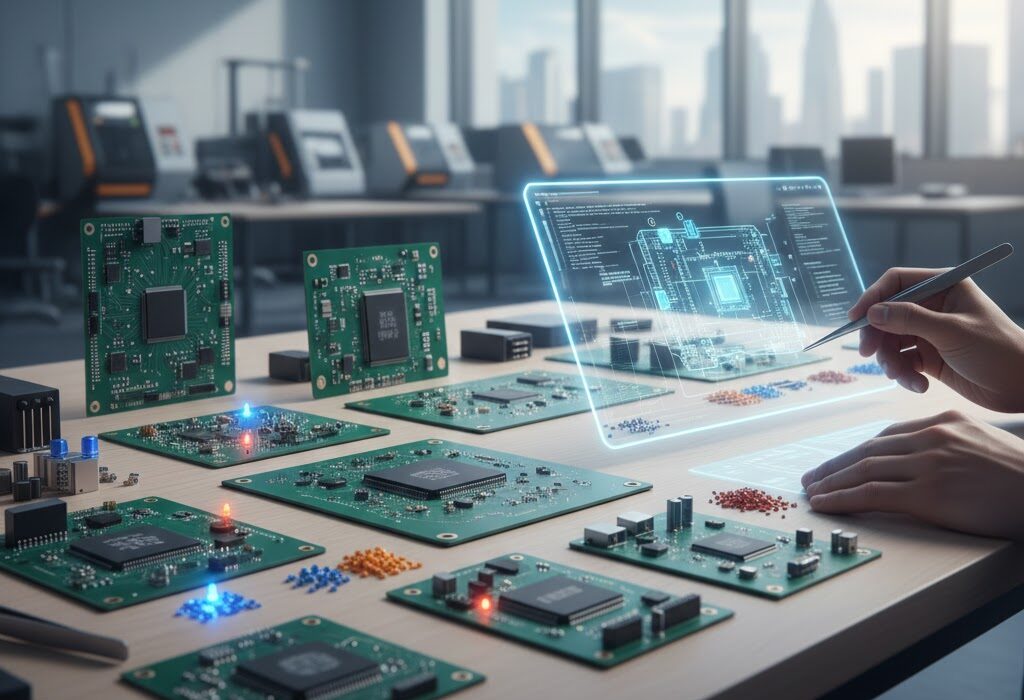
The engineering team at PCB Express is constantly pushing the limits of what’s possible in manufacturing speed and precision to meet your demanding project timelines. That’s why I am incredibly excited to announce the launch of our new Rapid Prototyping Service Tier!
This new service isn’t a simple upgrade it’s a complete optimization designed for customers who must validate a design, test a new feature, or meet a critical deadline without ever compromising quality. By leveraging our Phoenix-based facility and rigorously optimizing our digital-to-physical workflow, we have dramatically reduced the fabrication timeline.
What This Means for Your Project Timeline
The Rapid Prototyping tier guarantees that standard 2-layer PCBs will be fabricated and ready to ship within an incredible 72 hours of receiving your confirmed order files. This speed is a game-changer, built on three essential operational pillars:
- Optimized Digital Vetting: Our proprietary software instantly reviews your design files (Gerbers, Drill Files, etc.) for manufacturability, virtually eliminating the slow human review process that creates drag in other shops.
- Dedicated Production Lane: Rapid Prototyping orders enter a dedicated, prioritized pipeline on our fabrication floor. This ensures continuous motion and minimal time loss between critical production steps, from etching and plating to final quality control and testing.
- Component Integration: As a component retailer ourselves, we maintain a robust inventory of standard parts. This minimizes reliance on external sourcing, eliminating one of the biggest bottlenecks when time is your enemy.
This new tier is the ideal solution for competitive hackathons, crucial university projects, or time-sensitive startup validation phases. It is the ultimate manifestation of our commitment to be your best partner in electronics innovation by delivering unparalleled speed and confidence exactly when your project demands it. Head over to our quoting page today and select the Rapid Prototyping tier we’re ready to bring your designs to life faster than ever before.

-

A Digital Home for Your Hardware Dreams
Hello everyone! I’m the owner of PCB Express, and I’m thrilled to introduce you to our specialized D2C manufacturing platform. You might be asking, “Another e-commerce site? What makes yours different?” That’s a valid question, and the answer is simple: We’re not just selling; we are manufacturing. We are a specialized direct-to-consumer (D2C) electronics manufacturing platform built to solve the two biggest roadblocks for modern hardware designers, engineers, and hobbyists: time and access.
The established PCB manufacturing model is fundamentally broken for anyone running small-volume projects or needing rapid prototypes. It forces you to navigate complex quoting systems, endure lengthy lead times that kill momentum, and comply with high minimum order quantities that drain budgets. This friction doesn’t just slow down a project it stalls innovation entirely.
Our E-Commerce Model: D2C Manufacturing
PCB Express is a D2C site because we control the entire vertical process, from your digital design upload to the final, high-quality board delivery. This streamlined approach cuts out middlemen and complex sourcing chains. Our platform is engineered specifically around quick turnaround for prototyping and low-to-medium volume production runs precisely the efficiency students, startups, and small engineering firms demand to iterate and move fast.
Why did we create this? We saw a glaring, underserved gap. Existing manufacturers are built to handle massive corporate orders, leaving the critical market of rapid prototyping and custom small-batch work struggling. We believe the future of electronics is open, accessible, and efficient. If you have a brilliant idea, you shouldn’t be penalized with a three-week wait or coerced into paying for thousands of units just to validate a concept.
Our mission is to democratize hardware design. By delivering an intuitive, digital-first experience, we enable you to focus entirely on your core strength designing and innovating. We handle the complexity of high-quality fabrication, guaranteeing that your boards meet stringent standards and arrive exactly when you need them. We are building this site for you, the innovators and disruptors who will power the next generation of technology.
-

Tech in the Crossfires: The De-Coupling Dilemma

The technology sector is not just affected by the ongoing trade war between the US and China—it is the primary battlefield. The conflict has evolved far beyond simple tariffs on consumer goods, focusing now on a strategic and deep de-coupling in the most advanced areas of technology.
The Choke Points: Semiconductors & AI
The core of the conflict revolves around control of the semiconductor supply chain and future dominance in Artificial Intelligence (AI):
- US Export Controls: The U.S. has imposed sweeping, strict export controls since late 2022, aimed at cutting China off from advanced AI chips and the tools (equipment and software) required to manufacture them. These controls specifically target chips below certain thresholds (e.g., logic chips of 16nm/14nm or below) and restrict U.S. citizens from assisting in the development of these advanced capabilities in China. The goal is to inhibit China’s military modernization and AI advancement.
- China’s Retaliation & Self-Sufficiency: China has retaliated with its own restrictions, notably controls on rare earth elements and other critical minerals (like gallium and germanium), which are vital inputs for high-tech manufacturing, including semiconductors. Furthermore, Beijing is rapidly accelerating its push for technological self-reliance (e.g., by directing state-funded data centers to use domestically-produced AI chips), prioritizing local firms like Huawei over foreign competitors.
Impact on Global Tech
This conflict has tangible, negative consequences across the global tech landscape:
- Supply Chain Fragmentation: Companies are forced to accelerate de-risking their supply chains, moving manufacturing capacity to countries like Mexico, Vietnam, and India. This diversification adds complexity and cost to logistics.
- Increased Costs and Volatility: Tariffs and counter-tariffs inject extreme volatility, increasing production costs for components and potentially leading to higher consumer prices for end-user electronics.
- Innovation Slowdown Risk: The creation of two distinct, parallel technology ecosystems (US/Allies and China) risks duplicating R&D efforts and slowing the pace of global innovation, particularly in a collaborative field like semiconductors.
A Temporary Reprieve
Following recent high-level meetings, there have been temporary signs of de-escalation. However, analysts warn this is a temporary fix. The fundamental, structural rivalry over technological dominance—and the use of export controls as a national security tool—remains the driving force, ensuring the tech sector remains squarely in the crossfires.
-

The RAM Price Surge: Another consequence of the AI Boom?

What are the current conditions of ram pricing?
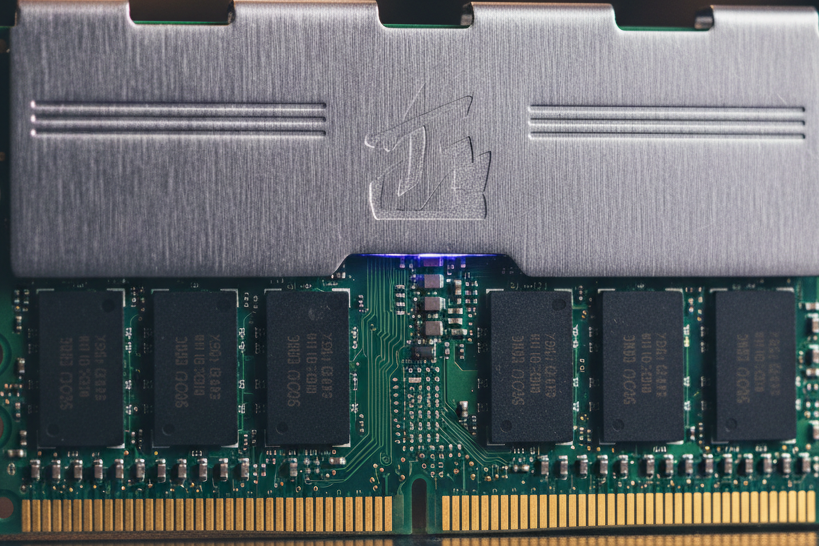
The current state of the Random Access Memory (RAM) market is one of rapid and significant price inflation, affecting both newer DDR5 and older DDR4 memory modules. Retail prices for popular DDR5 kits have seen notable increases, in some cases doubling since late summer/early autumn of 2025. DDR4 prices have also climbed dramatically, eroding their long-standing value proposition.Major DRAM producers like Samsung and SK Hynix have been reportedly raising the contract prices they charge for DRAM chips by substantial amounts (up to 30% or more for Q4 2025 quotes). Industry analysts predict that the upward price trend will continue into 2026, with some forecasts suggesting a prolonged memory shortage lasting several years.
What’s fueling the surge in the price of memory?
- AI Data Center Appetite: The global build-out of AI infrastructure (training large language models, etc.) requires colossal amounts of memory, far exceeding previous enterprise demand.
- High-Bandwidth Memory (HBM) Priority: Memory manufacturers are strategically shifting a significant portion of their production capacity away from consumer-grade DDR4 and DDR5 chips to focus on High Bandwidth Memory (HBM), which is essential for high-margin AI accelerators like NVIDIA GPUs. This shift shrinks the available supply for the consumer and general PC market.
- Stockpiling: Cloud service providers and large tech companies are aggressively buying and stockpiling DRAM (and NAND flash storage) to secure inventory through long-term contracts, further tightening the remaining market supply.
- DDR4 Phase-Out: Simultaneously, major manufacturers are reducing or halting production of older DDR4 to dedicate capacity to DDR5 and HBM, causing prices for the older standard to spike due to scarcity.